

Charles Spencer has just made the argument the royal press really did not need to hear this week. During his BBC interview about Swan Song: Diana, My Sister, Spencer was asked about the press treatment of Prince Harry and Meghan Sussex. He did not dance around the comparison.
“If you look at an article in a tabloid about Diana or … Harry and Meghan, they can be really, really unpleasant,” Spencer said. He urged people to “learn from Diana’s example,” adding that for anyone “being destroyed in this way daily, it must be such a cancerous influence in their life.”
Spencer said relentless attacks hit Diana hard, despite her privilege and glamorous public image, and left her “really brought low.” Then came the point the royal media will probably spend the next week trying not to hear: Spencer said he sees “echoes of that now.”
The Media Is Hiding Behind Charles
Parts of the British tabloid press hounded Princess Diana for years and kept mining her life after her death, yet now some outlets seem more concerned that Spencer’s book might upset the King than with the press culture he is criticising. In the BBC interview, Laura Kuenssberg repeatedly pressed Spencer on his claims about Charles with the fervour of state media defending a dear leader, as though the real offence was daring to criticise the King at all.
That framing distracts from Spencer’s more uncomfortable charge: sections of the press subjected Diana to relentless pressure and helped create the media frenzy that followed her into the Paris tunnel.
For nearly 30 years, Diana has remained profitable material. Books, documentaries, anonymous briefings and anniversary specials have repeatedly recycled Diana’s marriage, mental health, relationships, parenting, private conversations and final months.
Spencer says senior media figures privately acknowledged their own role in Diana’s death, with one allegedly telling him, “We know we killed her,” while sounding resentful that Spencer had dared to say the same thing publicly from the pulpit at Diana’s funeral. Against that history, it is not difficult to see why parts of the tabloid press might be uncomfortable with Spencer, or with Harry, who has spent years challenging the same media culture that pursued his mother.

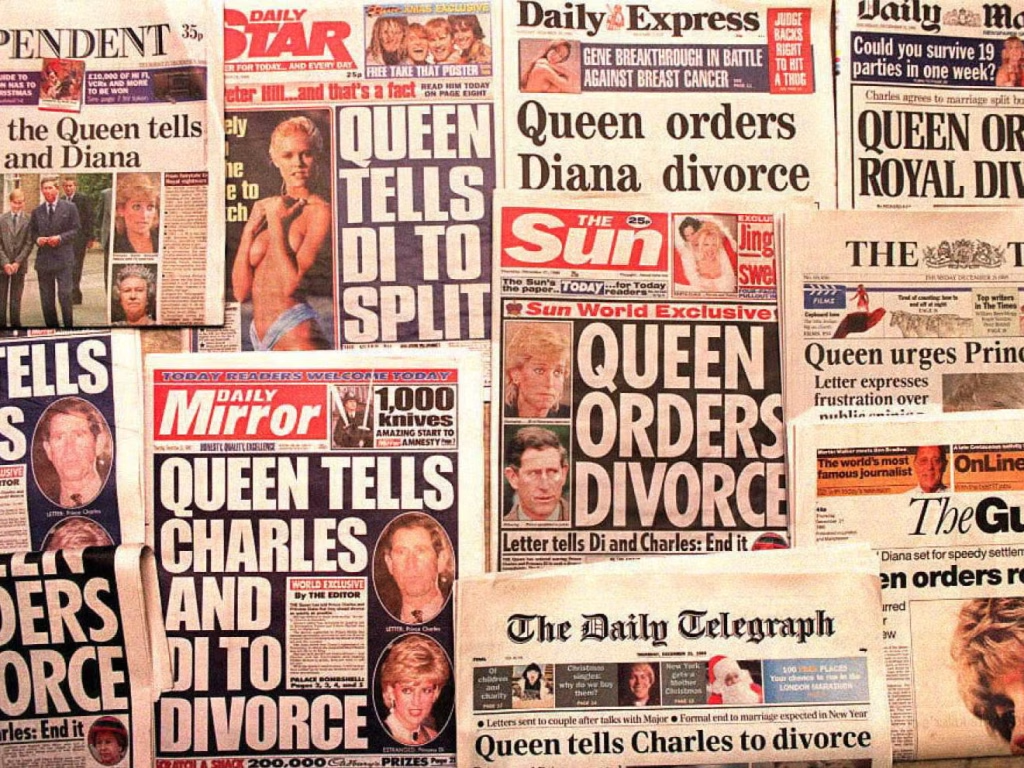


Now Spencer says he sees “echoes” of that treatment in the coverage of Harry and Meghan. Harry has spent years describing a press culture he believes never truly changed after his mother’s death. Meghan has spoken publicly about reaching a point where she no longer wanted to be alive amid enormous public and media pressure. Yet much of the same tabloid industry has continued turning their marriage, friendships, staff, children, security and family relationships into almost daily content.
So the sudden concern about how damaging negative headlines might be to Charles feels remarkably selective. The issue is why the media suddenly shows compassion when scrutiny reaches the Crown, yet expects the people Spencer says relentless coverage is “destroying” to simply endure it.
Spencer also links Harry and Meghan’s security to Diana’s experience, arguing that the lessons of her death go far beyond hostile headlines. And yet King Charles’s most ardent defenders say they simply cannot believe he would speak cruelly to Charles Spencer, even though the King has allowed his own son’s security to be denied.
The Headlines Are Almost Identical
When Charles Spencer says he sees “echoes” of Diana’s treatment in the coverage of Harry and Meghan, the comparison is easy to see. The press repeatedly framed Diana as difficult, unstable, paranoid and a source of tension among royal staff. Decades later, many of the same labels have been applied to Harry and Meghan.
Diana was branded “difficult.” Meghan has been described the same way. Diana was framed as paranoid when she feared being watched or briefed against. Harry later said unlawful newspaper activity left him “paranoid and suspicious of his friends.”
The staff stories also sound familiar. Reports accused Diana of having a “brutal outburst” at royal employees. Years later, reports claimed Meghan flew “into a rage” at a personal assistant and pushed an “entire household” close to quitting.
Then there is the isolation narrative. The press portrayed Diana as pushing people out of Charles’s life; decades later, it casts Meghan as the reason Harry lost friends and became estranged from people he once knew.
Harry has also described the press culture in stark terms. In Spare, he wrote that paparazzi had become increasingly “radicalized” and called newspaper editors “their mullahs,” arguing that editors encouraged the behaviour.
The circumstances are not identical, but the pattern is familiar: the difficult woman, the paranoid royal, the isolating spouse.
Meghan has also faced something Diana did not: racialised commentary and coverage. Put the headlines side by side, and Spencer’s point about “echoes” is hard to miss.


Richard Kay’s Attack Looks Even Worse Now
Spencer’s comments also put Richard Kay’s recent column into an interesting new light. While Kay praised Spencer’s account of Diana, he still used Diana’s legacy to criticise Harry and Meghan, the very couple Spencer has now explicitly placed within the same conversation about destructive media treatment.
That contradiction is difficult to ignore. You cannot praise Spencer for exposing what relentless criticism did to Diana, then ignore him when he says the press now treats Harry and Meghan in similar ways. Spencer was careful. He said he was not speaking for Harry and Meghan. He was making a broader point about what happens when a person becomes a profitable daily target.
Related Stories


Maybe Diana’s Actual Lesson Should Finally Be Learned
What Spencer is describing is generational. Diana cried over relentless newspaper attacks. Harry has repeatedly described his hatred of the same tabloid culture. Meghan described reaching a point where she no longer wanted to be alive. Now Spencer is openly warning that he sees echoes of what happened to his sister.
It should make people uncomfortable with the obvious double standard. If negative coverage can become a “cancerous influence” when directed relentlessly at human beings, that principle cannot suddenly become important only when a 77-year-old King experiences one difficult week.
The lesson from Diana cannot be to protect the monarchy from uncomfortable stories. The lesson should be to stop turning individual human beings into permanent targets and then acting surprised when the damage eventually becomes part of the historical record.
Embed from Getty Images Embed from Getty ImagesThese Diana-era front pages show the same pattern Spencer describes: intrusion became entertainment, private pain became spectacle, and Diana herself became the story the tabloids could endlessly sell.
Embed from Getty Images Embed from Getty ImagesThese front pages capture Spencer’s “echoes” perfectly: the press casts Harry and Meghan as agents of betrayal, fury and punishment, just as it once cast Diana as the disruptive problem inside the royal story.
Discover more from Feminegra
Subscribe to get the latest posts sent to your email.