

Mattel, a $6.3 billion company with over 200 brands and famous for its iconic Barbie dolls, is facing serious allegations of slave-like labor practices in its factories in China. Investigations, including the Channel 4 Dispatches documentary “Barbie’s Dirty Secrets” by journalist Isobel Yeung, have exposed dangerous working conditions, bullying, and the exploitation of workers in the Dongguan, China factory, where Barbies and other licensed products like Disney toys are produced.
Allegations of Unsafe Working Conditions in Barbie Factories
Workers in Mattel’s Dongguan factory endure unsafe and grueling conditions. According to the undercover footage revealed by Channel 4, factory employees handle scalding hot plastic to create Barbie dolls without receiving any safety briefings or proper protective gear. As a result, many suffer burns and blisters on their hands. Employees reported working under extreme pressure, as they struggle to meet excessive quotas, with some tasked to produce 1,000 Disney Moana dolls in a single shift while earning just £16.90 ($22.09) for 11 hours of work—less than 2p per doll.
The investigation found that workers often sign mandatory overtime agreements, forcing them to work more than 100 hours of overtime per month—three times the legal limit in China. Workers described feeling suffocated by the relentless pressure, with one remarking, “Every day I feel so much pressure I cannot breathe.” Another worker stated, “I won’t finish it even if I vomit blood.” These conditions not only highlight the exploitative nature of factory work but also reveal the mental and physical toll it takes on employees. A Channel 4 undercover reporter, who worked in the factory for three days, noted that he was “physically near [his] limit” by the end of his brief stint.
Response from Mattel and Their Barbie Slave Labor Allegations
In response to the allegations, Mattel issued a statement asserting its commitment to providing a safe and healthy working environment. The company stated that it treats employees fairly and respectfully, and is conducting an independent investigation into the factory’s conditions. Mattel emphasized that the ICTI CARE Foundation, which oversees ethical supply chains, regularly audits its facilities.
Embed from Getty ImagesDespite these claims, the broader narrative around Mattel’s legal and ethical stance raises concerns. Mattel’s aggressive legal tactics have come under scrutiny, with the company filing 268 cases for trademark infringement in the past five years—more than the four largest toy companies combined. Critics argue that while Mattel focuses on protecting its brand, it neglects the safety and well-being of its workers.
Related | Inside the Labubu Craze – Why This “Cute but Creepy” Toy Sparked Chaos Around the World
Cultural Icons Used for Profit in Mattel’s Barbie Line
Mattel’s commodification of cultural icons adds another layer of controversy. Virginia Woolf’s family vehemently opposed Mattel’s proposal to create a Barbie doll of the celebrated British writer. Virginia Nicholson, Woolf’s great niece, stated that the family would allow it “over our dead bodies.” The family criticized the company’s design for misrepresenting Woolf, likening the doll’s appearance to that of a “Laura Ashley milkmaid.”
Embed from Getty ImagesSimilarly, Frida Kahlo, a well-known supporter of communism, became another target for Mattel’s Barbie doll range. Despite Kahlo’s relatives attempting to block the production of the doll, they failed, and Mattel went ahead with its plans, further capitalizing on the artist’s legacy. This transformation of political and cultural icons into commercial products reflects how far removed the figures are from their original values.
Contradictions Between Mattel’s Empowerment Message and Worker Exploitation
These controversies highlight a significant contradiction in Mattel’s branding. While Barbie’s recent evolution has embraced female empowerment and diversity, the labor force producing these dolls, predominantly women in developing countries, faces relentless exploitation. Thulsi Narayanasamy, Director of International Advocacy at Worker Rights Consortium, pointed out that the factory workers are treated as disposable as the dolls they create.
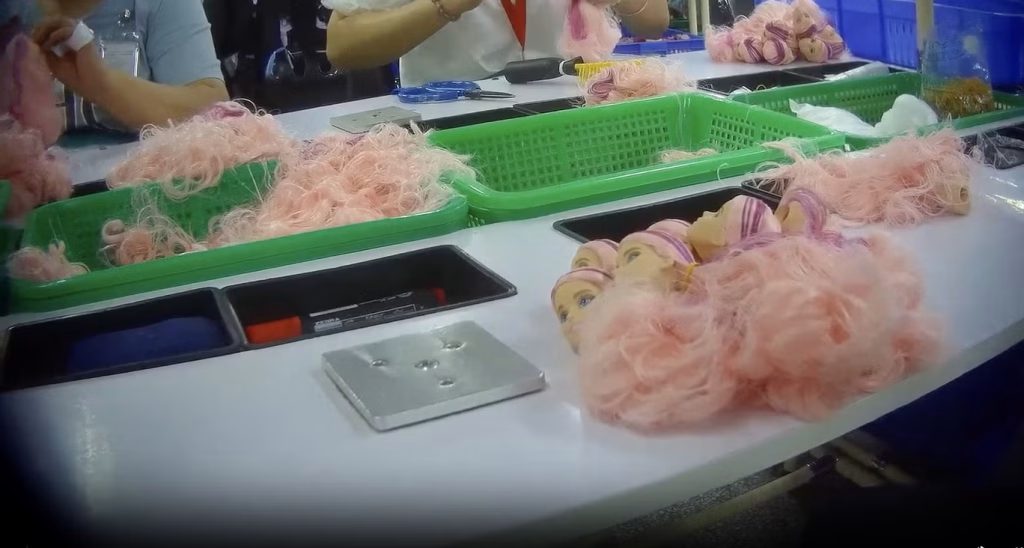
The exploitation contrasts sharply with the empowerment message Mattel markets to its consumers. While consumers in the West are encouraged to buy Barbie dolls that promote empowerment, the workers tasked with manufacturing these products endure grueling conditions for meager pay.
The Fisher-Price Rock ’n Play Sleeper Controversy
Mattel’s ethical issues extend beyond its labor practices. The company faces ongoing criticism for its handling of the Fisher-Price Rock ’n Play Sleeper, a product linked to nearly 100 infant deaths. Despite warnings from Canadian and Australian authorities, Mattel continued selling the sleeper in the U.S. and profited heavily, earning around $200 million. While the product was recalled in the U.S., only 10 percent of sleepers have been returned. Mattel’s CEO, Ynon Kreiz, testified before U.S. lawmakers, denying that the product was inherently dangerous, despite mounting evidence to the contrary.
The Need for Ethical Change in Global Supply Chains
The allegations against Mattel expose a stark disparity between the company’s public image and its treatment of workers and product safety concerns. While Mattel continues to promote female empowerment through its diverse range of Barbie dolls, the predominantly female workforce behind the scenes faces unsafe conditions, exploitation, and meager pay. These issues raise important questions about the ethical responsibility of companies like Mattel and the need for stronger labor protections.
As consumers, we must question whether the products we purchase align with the values they claim to represent. In the case of Barbie, the cost of empowerment should not come at the expense of worker exploitation.
Embed from Getty ImagesDiscover more from Feminegra
Subscribe to get the latest posts sent to your email.